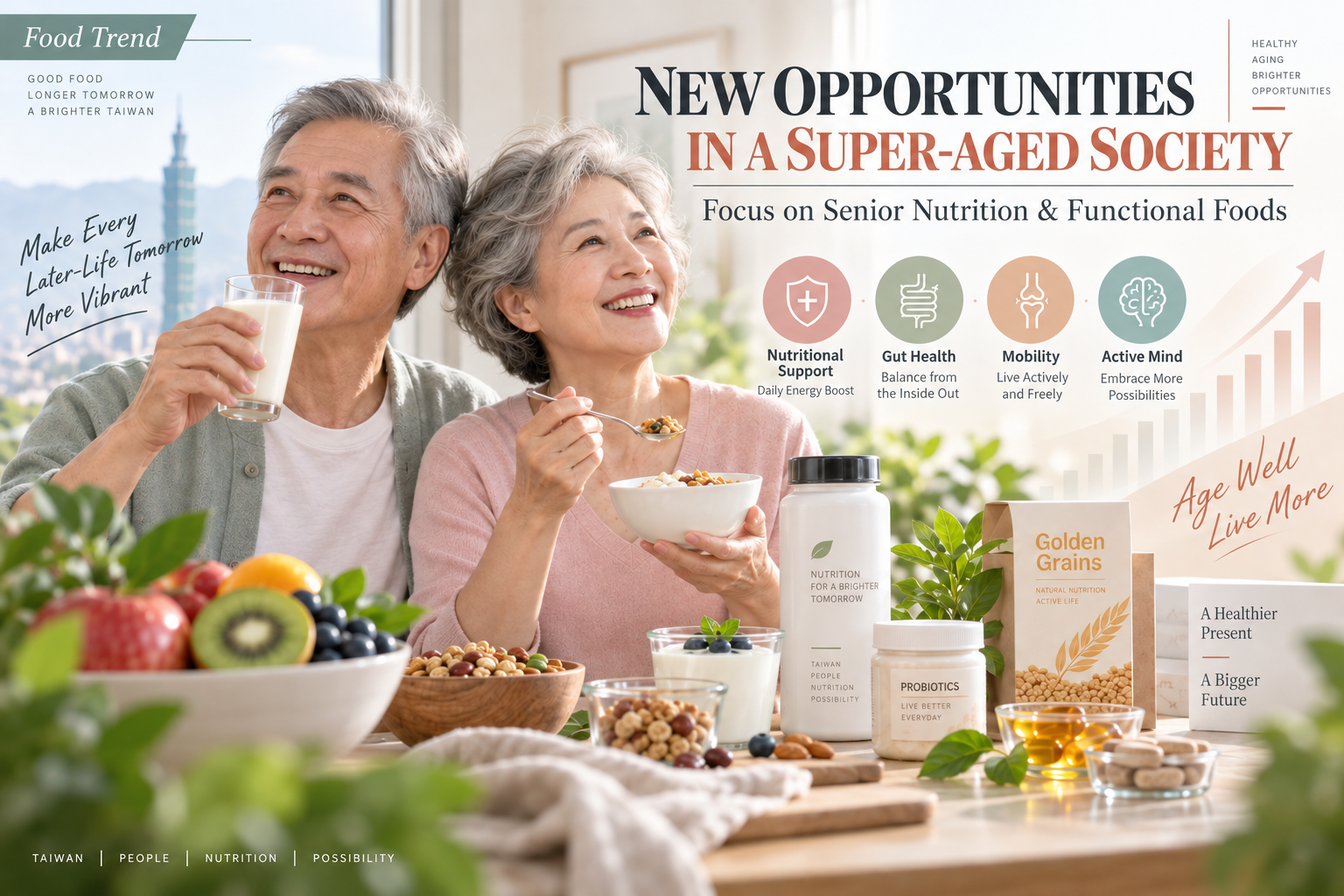
In 2026, Taiwan officially entered a super-aged society, with people aged 65 and above accounting for more than 20% of the population—approximately 4.67 million people.
And this is only the beginning. According to projections by Taiwan’s National Development Council, the proportion is expected to exceed 30% before 2040.
What does this mean? A large and steadily growing consumer group is moving to the center of the market. For food businesses, population aging is no longer a distant social issue. It represents a clear and measurable growth opportunity.
Older Adults Are the Most Loyal Consumers of Health Supplements
When it comes to identifying a consumer group with a high repurchase rate and a long customer lifetime, older adults clearly stand out.
According to Worldpanel’s consumer data, nearly eight in ten Taiwanese consumers aged 60 and above—79%—purchased health supplements during the past year. This group also contributed nearly 20% of the total health supplement market.
More importantly, their purchasing behavior tends to be long-term. Older consumers place great importance on safety, consistency, and whether a product can help them maintain their current health and quality of life. Once they trust and accept a product, they are likely to continue purchasing it for months or even years.
In other words, the senior market is not only large—it is also highly loyal.
What Do Older Consumers Really Need? Four Key Nutrition Priorities
To enter this market successfully, businesses must first understand the physical and nutritional needs of older adults. Senior nutrition generally centers on four key areas:
Protein — Preventing age-related muscle loss and maintaining physical strength are among the most important nutrition priorities for older adults. Demand is particularly strong for protein supplements that are easy to digest and absorb.
Bone and joint health — Calcium, vitamin D, and ingredients that support joint health can help older adults maintain mobility and independence.
Gut health and digestion — As digestive function may decline with age, probiotics and dietary fiber are becoming essential parts of senior nutrition.
Easy chewing and swallowing — Soft-textured, easy-to-eat nutritional foods and snacks are important product-design considerations that should not be overlooked.
These four areas provide a practical checklist for importers and food trading companies when evaluating potential products.
Three Market Entry Strategies for Food Trading Companies
First, focus on products that combine clear functional benefits with ease of consumption. Older consumers are generally less interested in following trends. They want products that are easy to understand, safe to consume, and capable of delivering noticeable benefits. Japan and Europe have relatively mature senior nutrition markets and are therefore valuable sourcing regions to explore.
Second, differentiate through safety and trust. Older consumers are especially attentive to ingredients, product origins, and quality. Transparent sourcing information, testing and certification, and clear, clean-label communication can become powerful selling points for both retailers and end consumers.
Third, do not overlook caregivers as the hidden buyers. Many senior nutrition products are purchased by adult children, family members, or professional caregivers. Products with clear packaging information and immediately understandable benefits are more likely to be selected by the people making purchases on behalf of older adults.
Conclusion
A super-aged society should not be viewed only as a crisis. It also represents a highly predictable and long-term consumer trend.
As nearly one-fifth of Taiwan’s population enters older age, demand for senior nutrition and functional foods will only become more essential and resilient. For food importers and trading companies, now is the time to review product portfolios and identify unmet needs in the senior nutrition market.
After all, consumers who enter this market are likely to remain loyal for many years.