


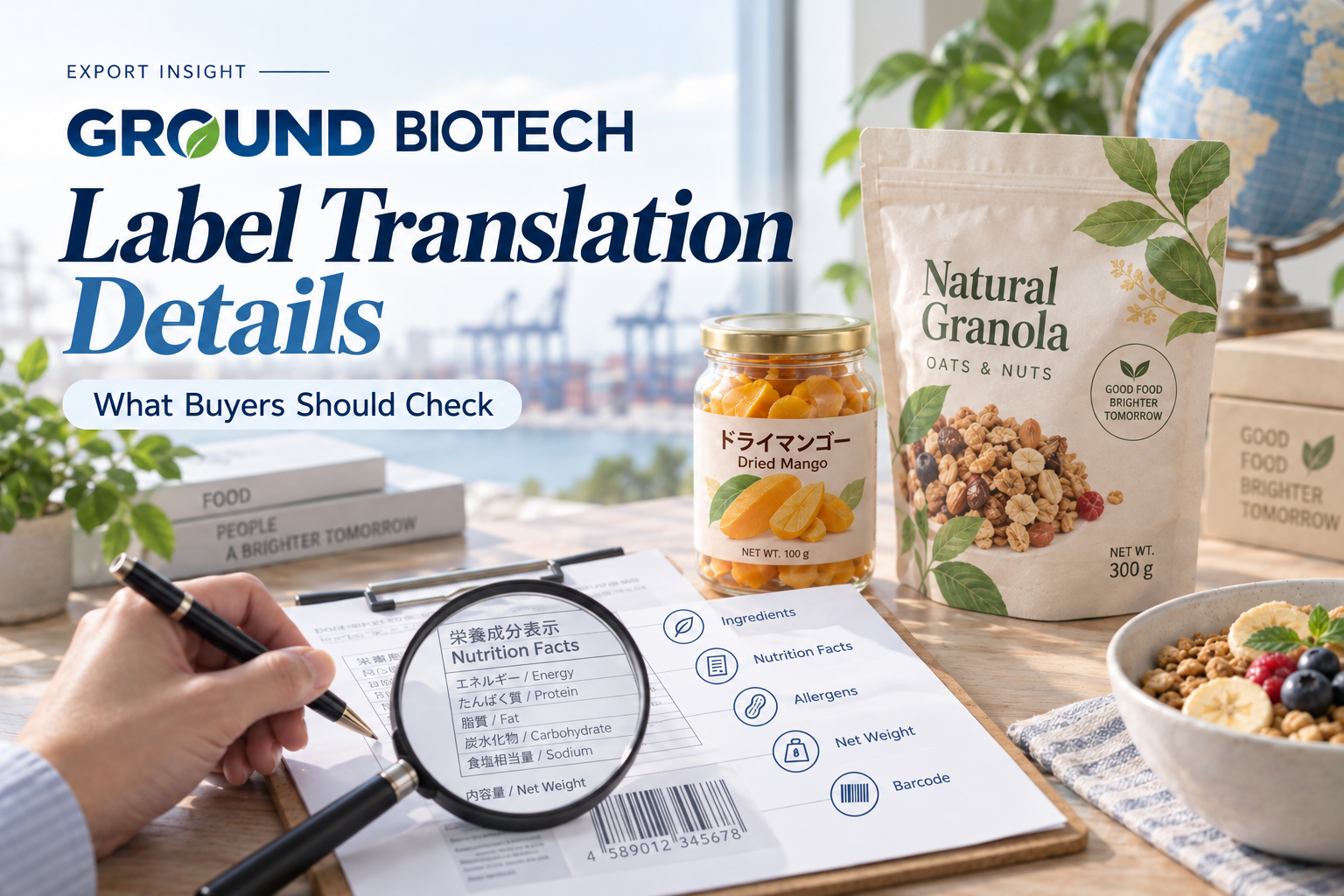
Why Label Translation Is Critical to Import Success
Whether a food product can enter the market smoothly often depends not on the product itself, but on its label. Food labeling regulations are strict and clearly defined in many countries. If the translation or labeling does not comply with local requirements, the goods may be required to be relabeled during border inspection, returned to the exporter, or even destroyed under the supervision of the authorities. These situations all lead to real losses in both time and money.
That is why experienced buyers check label translation details carefully before placing an order. The following points are among the most common sources of errors and the most important details that should never be overlooked.
Six Details Buyers Must Check One by One
1. Allergen labeling: the most common and serious issue.
Allergen labeling is one of the most closely inspected areas worldwide. Major allergens such as gluten-containing cereals, crustaceans, eggs, fish, peanuts, soybeans, milk, and tree nuts are required in many markets to be clearly highlighted, such as in bold text, and must appear in the ingredient list. If allergens are omitted or translated inaccurately, the product may face rejection, recall, or other compliance risks.
2. Ingredient order and terminology.
Ingredients must be listed in descending order by weight and must use official terms recognized by local regulations. Direct translations or informal names can easily cause problems. Food additives, in particular, must correspond to approved names in the target market.
3. Nutrition label units and format.
Different markets have different requirements for nutrition labeling, including required nutrients, measurement units, serving-based values, values per 100 g, and layout format. The numbers cannot simply be copied and translated without checking local rules.
4. Net weight and product name.
The product name must accurately reflect the actual product, while the net weight must follow local measurement habits and regulatory requirements. These are basic fields, but they are often overlooked.
5. Country of origin and date marking.
The country of origin, manufacturing date, best-before date, and expiration date may need to follow different formats, wording, and placement rules depending on the market. These details should be aligned with local requirements during translation.
6. Language requirements.
Each market has specific language requirements. The European Union requires labeling in the official language of the target market. In the United States, FDA rules require mandatory labeling information to be fully translated if another language appears on the package. In China, mandatory labeling information must be presented in Simplified Chinese.
Three Practical Suggestions for Buyers and Trading Companies
First, request the complete label translation before placing an order, instead of waiting until the goods arrive to discover problems. Use the six points above as a checklist and review them one by one.
Second, choose suppliers with experience in export labeling. A supplier that can proactively provide labels that meet the requirements of the target market can help reduce relabeling costs, communication delays, and compliance risks. It also shows that the supplier has mature export experience.
Third, keep flexibility for relabeling. If a label does not meet local requirements, local relabeling is often the most cost-effective solution. Agreeing in advance with the supplier on the responsibility and process for label corrections can greatly reduce potential risks.
Conclusion
Label translation may seem like simply converting words from one language to another, but in reality, it requires knowledge of regulations, professional terminology, and market practices. For import buyers, checking allergens, ingredients, nutrition facts, net weight, country of origin, date marking, and language requirements before placing an order can help avoid most border inspection issues.
Choosing a supplier that understands export labeling is like adding a layer of protection to every shipment. It is one of the most cost-effective ways to reduce import risk and protect your business reputation.