


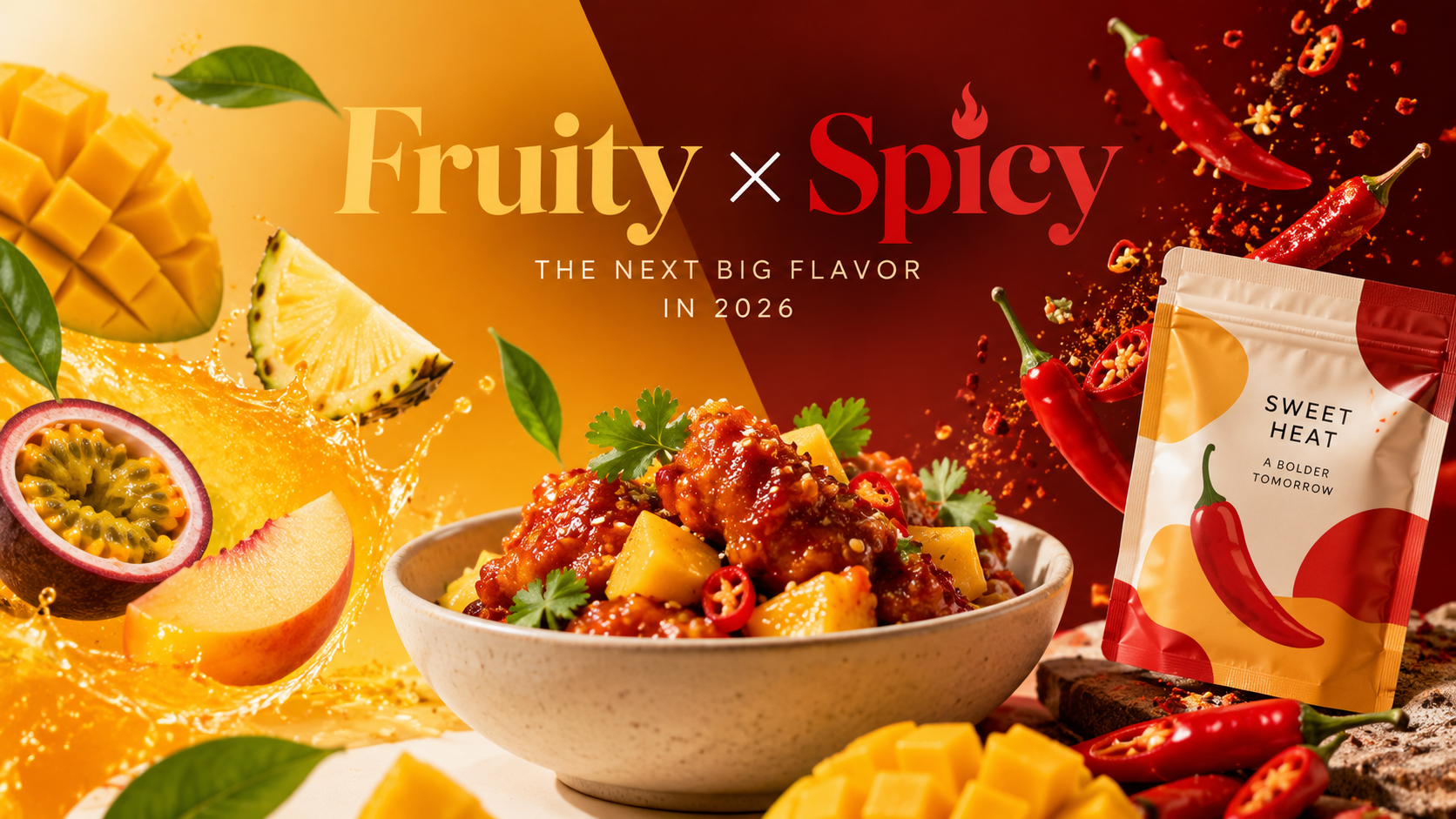
From Swicy to Fricy: The Next Evolution in Flavor
One of the biggest flavor buzzwords of 2025 was Swicy—a combination of sweet and spicy, with hot honey and spicy mango sauces among its best-known examples.
In 2026, the trend is evolving into Fricy: replacing the sweetness of refined sugar with the natural, vibrant sweetness of real fruit, while keeping a subtle spicy kick.
Mango, watermelon, passion fruit, pineapple, and citrus paired with a chili finish—this layered flavor experience is exactly what makes Fricy so appealing. Fruit sweetness opens up the palate first, while the heat follows and extends the finish.
Better yet, consumers do not need a high tolerance for spicy food to enjoy it. The approachable level of heat gives Fricy broad appeal, making it naturally suited to the mass market.
The Numbers Tell the Story
Fricy is more than a social-media trend—it is already translating into real sales momentum.
Retailers have seen clear growth in demand for fruit-and-spice condiments. Mexican chamoy sauce, traditionally made with pickled fruit, chili, and lime for a sweet, sour, and spicy flavor profile, recorded a 64% increase in sales within three months. Japanese yuzu kosho also grew by 28%.
When a flavor category can generate double-digit—or even more than 60%—growth within a single quarter, it suggests that consumers are moving beyond trial purchases and beginning to come back for more.
Which Product Categories Stand to Benefit Most?
One of Fricy’s biggest strengths is its versatility. It can be applied across a wide range of food and beverage categories.
Sauces and condiments are the natural starting point. Chamoy, spicy fruit sauces, and yuzu kosho already embody the trend.
Snacks are another strong opportunity. Chili mango, spicy fruit gummies, and sweet-sour-spicy preserved fruits can deliver exactly the kind of exciting yet approachable flavor experience consumers are looking for.
In beverages, fruit sparkling drinks and functional beverages with a subtle spicy finish are also beginning to appear.
For food importers and distributors, these are among the easiest categories to enter and test in the market.
Three Takeaways for Food Traders and Importers
First, prioritize products that combine international flavors, fruit, and spice. Traditional flavors from Mexico, Southeast Asia, and Japan offer strong storytelling potential and reinforce the role of importers as providers of fresh and distinctive products from overseas.
Second, use flavor stories and market data to convince retailers. Sharing figures such as chamoy’s 64% sales growth over three months can give buyers greater confidence in listing a product than price quotations alone.
Third, enter during the adoption stage rather than waiting for the trend to mature. Fricy is only beginning to take over from Swicy. Sourcing now means lower competition and more room for differentiation. Once the market becomes crowded, margins are likely to tighten.
Conclusion
Fricy is gaining momentum because it offers consumers both novelty and familiarity. It feels different enough to be exciting, but approachable enough to avoid being overwhelming.
For food traders and importers, it represents a relatively accessible product direction with strong conversation value and measurable sales momentum behind it.
Those who add “fruity × spicy” products to their sourcing lists early may be among the first to capture one of 2026’s hottest flavor opportunities.