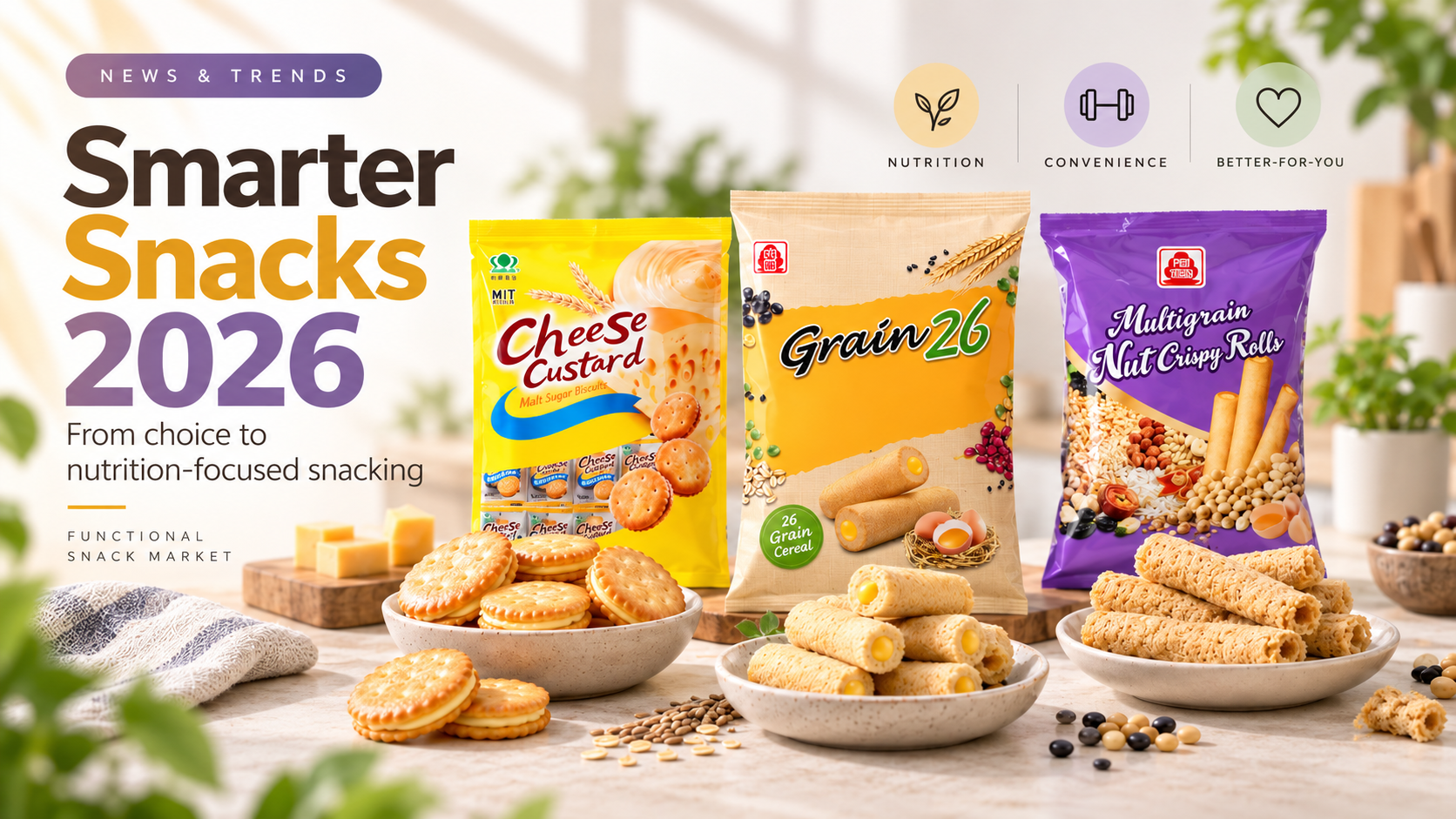
The Role of Snacks Is Being Redefined
For a long time, snacks were associated with indulgence, cravings, and guilt. That perception is changing.
In 2026, consumers are increasingly viewing snacks as nutrition vehicles—not simply something to satisfy hunger between meals, but a convenient way to add protein, fiber, probiotics, and other functional nutrients to their daily diets.
Behind this shift is a simple change in mindset: the market is no longer focused on offering more choices, but on providing smarter choices.
Competition in the snack industry is moving beyond the number of flavors available. Today, brands are expected to deliver products that are healthier, more responsible, and better aligned with consumers’ individual needs.
The Numbers Show This Is Structural Growth, Not Just Hype
High-protein snacks are one of the clearest examples of this shift.
The global high-protein snack market is projected to grow from US$5.27 billion in 2025 to US$5.86 billion in 2026, representing a compound annual growth rate of 11.2%, with the market expected to reach approximately US$8.87 billion by 2030.
Plant-based snacks are also showing strong momentum, with the market projected to expand at a compound annual growth rate of 8.7% from 2026 onward.
These strong growth rates suggest that functional snacking is not simply a temporary trend. Instead, it reflects a structural shift in consumer eating habits.
Three Product Keywords for 2026
1. Build functionality into foods people already enjoy.
Consumers want products that look and taste like regular snacks, while quietly delivering additional nutritional benefits such as protein, fiber, or probiotics.
High-protein chips, protein cookies, and functional gummies are becoming key examples of this “effortless nutrition” trend.
2. Clean labels are becoming a basic requirement.
Claims such as “no additives” and “made with natural ingredients” are no longer just added advantages—they are becoming the minimum expectation.
More than 60% of consumers consider natural ingredients an important purchasing factor. The more transparent and understandable the ingredient list is, the easier it becomes for brands to build trust and encourage repeat purchases.
3. Plant-based products continue to expand.
Plant-based proteins and formulations made with naturally derived ingredients address both health and sustainability concerns.
As a result, plant-based snacks remain one of the strongest opportunities for brands looking to combine consumer demand, market growth, and trend relevance.
Three Takeaways for Food Traders and Importers
First, evaluate products based on their benefits, not just their flavors.
A snack that can clearly communicate its protein content, fiber level, or functional ingredients is much more aligned with the direction of the 2026 market.
Second, turn transparency into a competitive advantage.
Clear ingredient lists, clean-label claims, and transparent sourcing information are increasingly important when convincing both consumers and retail buyers. For imported products in particular, clear traceability and ingredient transparency can become valuable trust signals.
Third, invest in plant-based and multi-functional products.
Products that combine **plant-based ingredients with multiple functional benefits—such as protein + fiber + probiotics—**can address several consumer needs at once and provide stronger long-term growth potential.
Conclusion
As snacks evolve from a source of “guilt” into a vehicle for nutrition, the logic of the entire snack aisle is being rewritten.
Consumers are no longer simply asking, “Does this come in a flavor I like?” They are increasingly asking, “Is this good for me?”
For food traders and importers, the opportunity is clear: companies that prepare their portfolios early with products that are smart, transparent, and functional will be better positioned to capture growth as the market shifts from “more choices” to “smarter choices.”